
Every Writer, Artist, Poet, and Craftsman knows the struggle. It might be said that it is universal. A constant threat to the creative process. Some call it writer’s block. Some call it a lack of inspiration. Nothing is more daunting than staring at a blank document or empty page and having no idea what to write.
One of the most challenging aspects of writing is coming up with a good idea. The story has to be intriguing enough to attract readers, engaging enough to retain interest, and involved enough to make up an entire book, story, or paper. Also, and in my opinion equally important, is that the story must be fun for the author to write. If you don’t like your own story, you’ll never make any progress writing it. You, like the reader, must become invested in the idea.
There are two types of inspiration for writing. Scratch that, there are probably a lot more types than that. But I’ll be discussing only two of the types.
Firstly, you must have an idea for the book as a whole. What drives the story forward? What is the purpose and path of the story? Every story needs a broad idea of what will happen. This does not have to be exactly figured out when the writing process begins. It never is. But the writer needs to know their story at least a little. What are the main events? Who are the main characters? What is the underlying theme behind the words? Every story has several key components: character, plot, and world. These three things make up the story. It doesn’t have to be difficult. It could be the story of a mother at a grocery store looking for the perfect head of cabbage. Even that simple tale includes a character, a location, and a problem that needs solving.
Let’s take a deeper look into each component to better understand their importance.
Plot
The plot encompasses the events of the story. In short, what happens? As every human being can attest, there is always some problem in life. No person lives a perfect, easy-going, and faultless life. Whether the issue is getting stuck in traffic or going off to war, everyone faces struggles. Some struggles are small, some are large, and some are unbearable. It is the human condition to struggle. The Bible even says that humans will face trouble, Christians especially so. Characters in stories are no different. The plot is the driving force behind a story. Without a problem to solve, the characters would be stagnant and boring. There would be no story to engage in. The plot is also, in my opinion, one of the hardest things to come up with in the planning process of writing. I always struggle with the events of the story. When I am planning a book, I usually get an image of the characters or the world first. I’ve spent many sleepless nights agonizing over what plot I can place characters into so I even have the chance to tell their stories. Because characters and worlds are good and important but they are only figureheads and bookends without an intriguing plot. There’s something else to consider for the plot as well, the genre. It may not always be the case, but more times than not, the genre of the story is picked before the writing takes place. Determining the plot of the story can also determine the genre. Is the main purpose of the story, romance, action, or horror? Figuring out the events of the story will help you decide what genre your work fits in. This can greatly aid in the writing process and will be invaluable when you are trying to market your book.
Characters
Characters are the heart and soul of a story. They include every being in the plot. This may be talking animals in a children’s book, aliens in a science fiction, pirates in an adventure story, or a teenage girl in a contemporary fiction novel. Characters are what the readers invest in. Ultimately, they determine whether your story will be successful. So, take care, dear writer, in selecting and getting to know your characters. Some characters may only appear for a sentence, and some will be the force driving the plot forward. Characters might also prove to be the most difficult aspects of the inspiration process. They, like real people, can be stubborn, boarish, antagonizing forces who fight against your every whim and dream. Most writers know the feeling of a character refusing to complete the task asked of them. They have a mind of their own. Sometimes a writer has a picture in their mind of how a character will act but when they begin writing, that image twists into a completely new and unforeseen form. I personally have had many a verbal argument with one of my characters and I find that it helps to imagine tying them up and rolling some duct tape across their arguing mouth. Regardless of the difficulty characters may create, they are essential. Creating them, allowing them room to grow, and caving to some of their demands on occasion will allow the story to move forward. When I say getting to know the character I mean intimately. How can you tell their story if you don’t know them? Just as the writer of a biography will sit down and interview the person they are writing about, so should the writer of a novel interview their characters. It is important to know their personality, appearance, preferences, and attitude even if that knowledge doesn’t make it to the final draft of your novel. How would the character react to a certain situation? How do they think of others and themselves? What is their attitude in different circumstances? Are they positive, realistic, or pessimistic? Etc…
World
Lastly, there is the world or location the story takes place in. This includes not only the scenery of the story but also the time period. The world of the story greatly impacts the plot and characters. It affects what is plausible whether that be magic or being able to catch a cab in New York. Having an idea of what the world is like can inspire a writer to create characters and plot. The more different the world is from the one people are used to, the more research and explanation are necessary. If magic exists, what are the rules of the magic? If there are dinosaurs walking among the humans, how do the two species interact? These are questions the author should know the answer to. Does the story take place in a world where there are dragons or other mythical beasts? Maybe it occurs completely submerged underwater. Or, as is often likely, it happens in our own world. Then the time must be considered. When does the story take place and how long of a period do the events take to occur? Cell phones did not exist in Victorian England and most modern high schoolers would not know what a phonograph was. Keep this in mind when building your story.
By knowing the answers to these questions, the writing process will be easier. But to determine those answers, the writer needs inspiration.
Remember that second aspect of inspiration I mentioned earlier? Here it is. Not only is there a broad sense of inspiration that gives the writer an idea for their book. There is also a secondary inspiration that only strikes in the midst of the writing process. When you hit a dead end in writing, writer’s block as some call it, when you feel stuck and need something to recharge your enthusiasm in the story, this is when inspiration plays its biggest role. It strikes when you least expect it and usually from an unlikely source.
So, how to find inspiration?
I don’t profess to know the answers to the search for inspiration. Perhaps I should have written a disclaimer at the beginning of this post. I can’t offer you the answer you need for your own story. But I can share a little of the process I use to find the answers to keep my story moving and to form a story in the first place. Everyone has different methods for finding inspiration. As for me, I have several. After becoming a writer, I am much more aware of the world around me. I analyze every detail, constantly on the hunt for something I can use in a new story. I try to find something creative in everything. Whether good or bad, I lock it away in a secret place just in case I need it. And most importantly, I take notes.
Step 1: Take notes
Some writers suggest carrying a notebook everywhere you go. I find that these writers are often men who happen to have pockets deep enough to carry a little notebook. Women are less fortunate. Never fear, I have a solution. Your cell phone should come pre-equipped with a note-taking app. Use it! I cannot stress enough that the best way to find inspiration is to write everything, and I mean everything down. Did you hear an interesting name? Write it down! Did a certain tree in the neighborhood park catch your eye? Write it down! Were you sitting in class or at work and an idea just came to you? Write it down! It doesn’t matter what it is, if it interests you, it might be useful later. Or not. It won’t hurt to write it down anyway. It only takes a few seconds and if you need inspiration, a name, a place, or a backstory, you can open up that note app and search for something useful. Keep a notepad next to your bed at night for any ideas that might come in a dream. Keep it waiting right outside the shower, that’s where I get my best ideas. Now listen closely, because I am about to disclose the most important advice I can. Whatever you do, do not, I repeat, do not tell yourself you will remember it later. Trust me, you won’t. Just please, for the sake of your own sanity, write it down!
Huh, maybe that should have been the title of this article.
I find that taking notes is particularly helpful when thinking of names. I take names for everywhere and everything. Place names, people names, animal names, the possibilities are endless. I am a name their, a name bandit. The best thing about names is that you can reuse them. There is no pirating or plagiarism of a name. If you like it, you can use it. Just, maybe don’t use the exact name both first and last. You can’t copy plot from other places but there’s nothing stopping you from reusing a name. One thing to be cautious of is to avoid using a name that is in an immensely popular story. It will be too obvious that you are resuing it. For example, you wouldn’t want to reuse the name Katniss or Gandalf. Notice something else about those names? They are both very unique and created by the author. Be creative with your own character names. You can mash two names together into a Franken-name if you wish. You can cut a name in half to make it sound more edgy. Just keep in mind that your audience should be able to at least pronounce the name in their heads. If they can’t, it will cause them to snag in the reading process.
Step 2: Pay attention
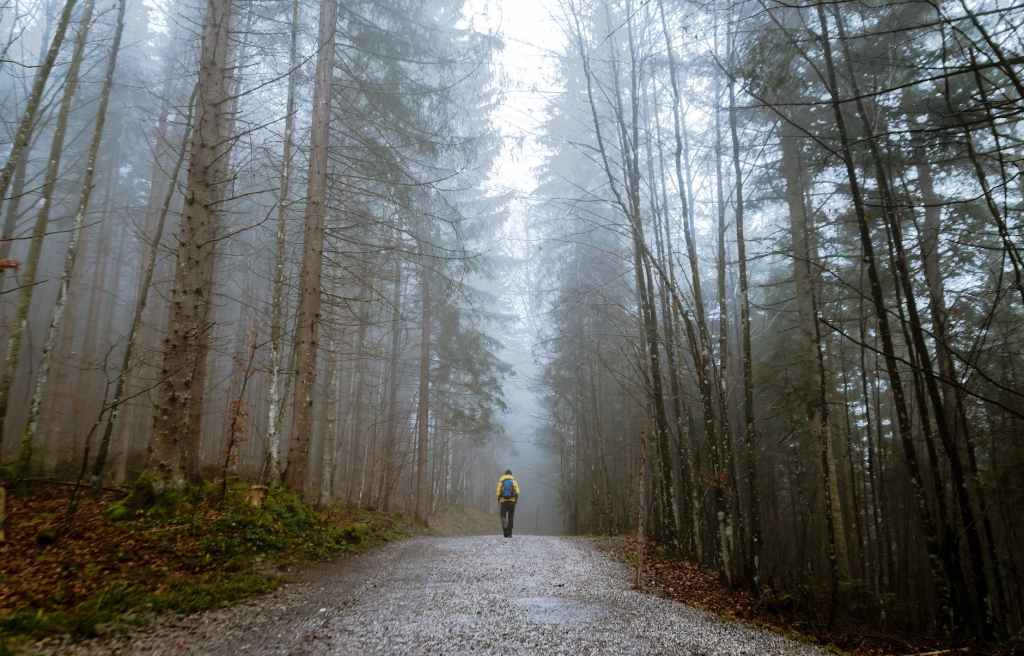
Paying attention to surroundings is one of the best ways to inspire a writer. I find that this is particularly true in the case of worldbuilding. When you pay attention to your surroundings, you often get entirely new ideas for stories. I went on a trip to the Oregon coast once and as I was looking out the car window, a million different ideas came to me. The trees, eerie fog, and damp, fresh smell painted the perfect backdrop for a mystery. On the beach itself, the sound of the waves and seagulls mixed with the scent of salt water, and the grit of sand between my toes sent a whole new set of ideas surging through my mind. A trip to New Mexico provided an entirely different experience that brought its own ideas carefully stored in my notebook to access later. If you don’t have the means to travel, don’t think that excludes you from this type of idea. Walking through a grocery store, watching fantastical movies, or even taking your dog for a stroll can get the thinking muscles working.
Step 3: Use all of your senses
Risking repetition of step 2, remember to use all of your sense to come up with ideas. I already mentioned how your surroundings can inspire you. Remember to not just use your eyes when thinking of an idea. Sight is only one sense in the human arsenal. Sometimes it isn’t even the most powerful.
Take a moment to think back on the last thing you ate. What impression did that meal give you? Was it a family recipe that gives you a sense of nostalgia? For me something that always makes me think of the past is grape soda and fudge. Why? Because my dad and I had a tradition to go to a candy store when we went on vacation and share a grape soda and square of fudge. Just thinking about that food takes me back to that place and the emotions I felt there. I can practically still taste it.
Then there’s smell. Smell can be both a blessing and a curse. I’ve taken out the trash my fair number of times. But I don’t think I would give up my sense of smell for anything. Some of my fondest memories are associated with smell. I remember the smell of Christmas, sugar cookies baking in the oven, a cup of hot cocoa, and scented candles. Smelling those things now brings back the memories of that time.
God blessed us with each of our senses for a reason. Sight, smell, taste, touch, and hearing, utilize them all in your story. They can paint a picture more vibrantly than a mere image ever could. Look for these subtleties in your writing, they can transport the reader into your world.
Step 4: Absorb new media
When I say absorb, I mean it. Don’t just read or watch, ponder, dive deeper, strive to understand. Take inspiration from other creators, both modern and ancient. How many stories have been influenced by The Odyssey, or Romeo and Juliet? It has long been true that creators take inspiration from each other. Many books taught in college literature classes were not strictly original ideas. Even The Inferno by Dante was influenced by The Bible itself. It is not wrong to take inspiration from other people’s works. Just don’t copy them. Imitation is the highest form of flattery. If you like a story, if it resonates with you, remember it. Don’t write an exact replica of it but take those hidden aspects that mattered the most to you and work them into your own story. It usually won’t be intentional. No two stories are the same so unless you are intentionally stealing from another’s work, then do not be afraid of slight similarities.
One of the main sources of inspiration for me comes from books, music, and television. Your favorite TV shows, movies, and songs take advantage of plot just as strongly as a novel. Music in particular is great at conveying feeling. Maybe a certain song will give you the idea for a whole new character (it has for me). Or maybe the background in a movie will influence the world you build for your story. The types of media we take in show in our writing.
So, be careful what you consume. As a Christian writer, this is especially important. I want my stories to convey what God wants. I do not want worldly desire and ideals to work their way into my stories. I have to be careful to protest myself against that form of media so my own stories do not reflect it.
When I was writing my first book, I was enthralled in medieval action stories. My own story took place in that same vaguely European continent that so many of those types of stories reside in. Countless books from all eras and covering all topics have also given me ideas. Even a boring history textbook has made me think about how certain time periods are underrepresented in fiction and how interesting it might be to explore them.
Conclusion
You have to know your triggers. When you’re feeling bored with your idea and need inspiration, watch an interesting movie, read a new book, listen to some music by your favorite artist. Or maybe go for a walk. Experience the world around you and pay attention to every little detail.
As the great Sherlock Holmes once said in A Study in Scarlet,
“To a great mind, nothing is little.”
Arthur Conan Doyle
References
Doyle, A. C. (2011). A Study in Scarlet. Penguin Books.
 S.G.Morand
Leave a comment