
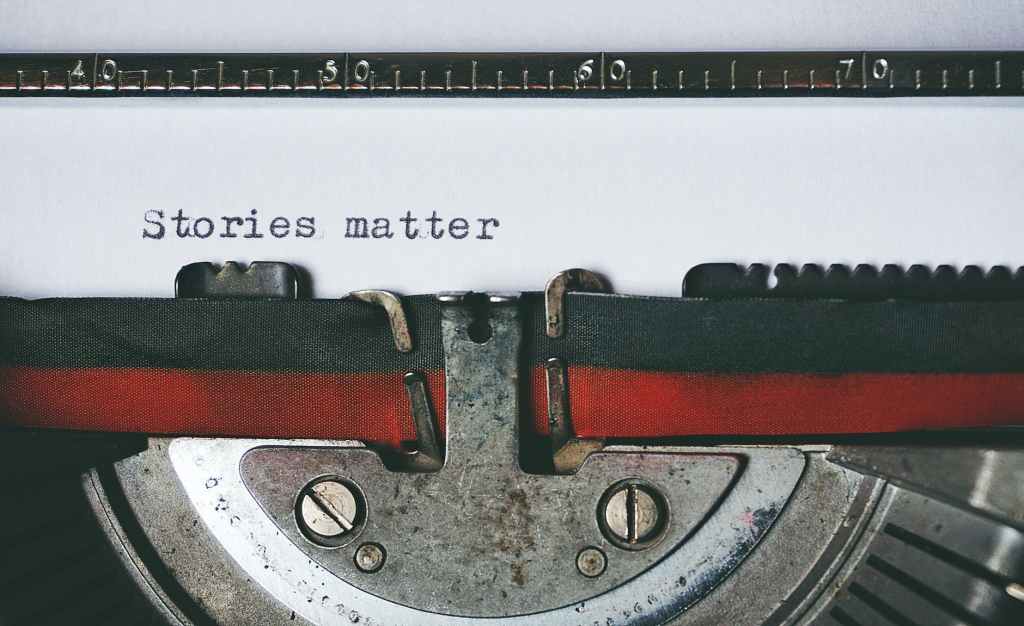
“There is something delicious about writing the first words of a story. You never quite know where they’ll take you.”
Beatrix Potter
What’s in a beginning?
What single sentence draws the reader in hook, line, and sinker? What leaves them drowning in the story, sitting on the edge of their seat and gasping for breath as they speed through the pages at a hazardous speed?
I believe without a shadow of a doubt that the first line is one of the most important things a writer can write. No pressure. The first line is what makes the reader search the story for an answer, sacrifice their time to learn more, and invest their heart and soul into a story. It is the thing that makes you wonder what is a Hobbit and who is Ishmael?
Without a good opening line that latches onto the reader’s lapels and refuses to let go, dragging them, sometimes reluctantly, through the story, there is a good chance that the reader will put down the book before they even start it.
The opening line must pass the “glance test”. You know the one. You might as well admit that you’ve done it yourself once or twice. The saying, “Don’t judge a book by its cover,” might more accurately become, “Don’t turn your nose up at a first line.” It’s easy to do. Especially in recent years, people have short attention spans. The consumption of any number of media and entertainment has created an urgency in every area of life. This is especially true for readers. Many people do not read at all. They find it tedious, mundane, and too time-consuming. People have lost their joy of reading and their appreciation for relaxation. They don’t have the time or energy to read several chapters before they get to the flesh of the story. They need an immediate hit of serotonin to continue flipping pages.
The “glance test” is simple. It’s the ritual that many if not all readers engage in before committing to a book. Picture it. You’re at a bookstore or library. You casually peruse the overwhelming selection of titles. Your fingers brush the spine. The first test is the title. Does it sound interesting? Yes. Then the cover faces its judgment as the book is pulled from its resting place. Intriguing perhaps, you think as you carefully open the front cover. Then the real test. You scan the first page. And there, right below the chapter heading are several words, a mere sentence, that either seals the deal or sinks the ship.

Don’t underestimate the power of this test. Reading a book is a serious commitment, especially for reluctant readers. If the boxes aren’t checked, the book will be placed back on the shelf, or worse still the only acknowledgment of your hard work will come in the form of a curt rejection letter from a publisher. Some readers and likely all publishers treat the first chapter of a book as the ultimate test. Take caution before proceeding. Look at it this way, some readers will scrutinize a book more than they would a prospective romantic partner.
The opening line establishes the tone of the story. Will it be dark or light-hearted? Comedic or serious? More than anything, the first line lets the reader know what they’re getting themselves into. Save the twists and revelations for later. There’s not much more disappointing than beginning a story with the expectation of a happy ending only to realize you’ve been reading a tragedy all along.
There are other jobs for the solitary starter. Many first lines serve as an introduction. Not a “how do you do?” introduction but a glimpse of the main character. The first line provides insight into how the character might think or act. It serves as a starting point. Where does the character start the story? Are they a pompous fool, a naive child, or a person of pride? The first line can hint at the change the character must endure. This is best done by showing not telling. The first line is a great opportunity to demonstrate how the character handles a situation or what their outlook on life is.
The first line can also describe the world the reader will soon be immersed in. It’s usually not a good idea to weigh the reader down with details at the beginning of a story but an interesting fact about a strange new world may be just the thing to rope them in. In this strange, unfamiliar land, do pigs fly? Does time travel exist? Is there some strange rule that must be abided by at all costs? Most importantly, how does this information affect the story that is to come? How does the main character feel about it?
The first line also serves to inform the reader as to what perspective the story is set in. Whether first person or third, the reader will know the instant they start reading. More than that, they will know what character or characters they will be spending their time with as the story progresses.
The first line is, in essence, a well of information. More than a well, it is the tip of the iceberg. And just below the water is the rest of the story waiting to be discovered.
So, what makes a good opening line?
“In a hole in the ground there lived a hobbit.”
J.R.R. Tolkien
When I think of first lines, I cannot picture anything more memorable than The Hobbit. The first line perfectly establishes the tone of the story, whimsical and mythical. It demonstrates that this story does not take place in our world. After all, what is a hobbit? It gives the readers an immediate curiosity and excitement. They ask, what is a hobbit? Why do they live in a hole? Then they continue reading and the story continues to draw them down into that hobbit hole, not a regular hole at all. And they meet that hobbit who turns out to be not just any ordinary hobbit. Tolkien paints a picture of a world very different from ours and captures the reader’s attention and heart right from the beginning.
The first line is perfect for its genre and audience. But different genres and different audiences require different beginnings. What about romance?
“It is a truth universally acknowledged, that a single man in possession of a good fortune, must in in want of a wife.”
Jane Austen
It is clear at the start the direction of Pride and Prejudice. The line gives the reader a feeling for the type of language that they will become accustomed to as they read through the book. It also forwarns them of Miss Austen’s trademark snarky sarcasm and wit. Is there anyone wittier than a Victorian woman? Similar to The Hobbit, this line poses a question. In what world is the above fact universally acknowledged? The answer only becomes clear as the reader progresses in the story and learns about the romantic and sometimes scandalous world of the Bennet sisters. Not only does the opening pose a question, but it also serves as an inciting incident that leads to the events of the rest of the book. After all, without the arrival of Mr. Collins, there would be pride or prejudice.
Then there is a more modern genre and a more modern example.
“I’ve watched through his eyes, I’ve listened through his ears, and I tell you he’s the one. Or at least as close as we’re going to get.”
Orson Scott Card
As a science fiction story, Ender’s Game could have chosen to use the first line to establish the world in which the story takes place (as many sci-fi writers do). Or the first line could have shown the events which led to the story’s main plot. Instead, Card took a different approach all the more memorable. He introduced the character. He went about it in a cryptic and roundabout way. He did not mention the character’s name or what he looked like or even the role he would play in the story. He didn’t even use the perspective of the character. All we know and all we need to know at the moment is that he is the “one”. This admission is given by another character, not even the main character himself. And the opening line brings up far more questions than answers. For example, how are they able to see through his eyes and listen through his ears? What role will he play? Why is he the “one”? And the last line, “as close as we’re going to get” gives a feeling of urgency and desperation. This is quite in line with the later events of the story. Ender’s Game is filled with a restless sort of torment only present with the human need for survival whatever the cost. The reader becomes intrigued by the very first line and has to keep reading to learn more and find out what is going on. In my opinion, Card’s unorthodox approach to the first line is nothing short of genius.
All of the above examples have something in common. They pose a question to the reader. What comes next? They offer the tiniest taste of what the reader can expect from the story and characters. No more, no less. They don’t flood the opening page with information and backstory. They don’t distract or confuse or mislead. They are raw and honest and to the point. They offer a sense of mystery that draws the reader deep into the pages until they lose themselves completely.
There are several things that a writer should consider before creating an opening line. But there are no rules. The best openings are strange, unusual, and unexpected. They don’t fit within a mold. Instead, they break free from any restraints.
First, get to know your story. Hopefully, you have an outline that you are working off of and you already know where the story is going. Don’t fret if you can’t find a perfect first line right away. Inspiration usually hits later maybe even at the end of the story. You can always return on the second draft and change things. You don’t have to get it right the first time.
Here are some things to consider.
- Tone – Is your story going to be light-hearted or more serious? This should influence your first line.
- Genre – If your book is a romance, it will most likely have a different first line than a horror. Unless you think romance is horror (in which case we would be in agreement). Make sure that your opening line is fitting for your genre of writing.
- World – What world does your story take place in? Consider alluding to that world in your opening line. You don’t have to describe it; you can write about an important event that made it how it is today. Or you could write about how people live in this world. Worldbuilding impacts every area of your story including the first line.
- Characters – Who are your characters? What position do they hold in your world? Do they have a destiny to fulfill? Is it important for your readers to know something about them right away? Your characters are the driving force of your story, if there’s something important about them that the reader should know, consider mentioning it in the first line. Maybe your character has a biting sense of sarcasm, you can establish that in the very first line of the book. Maybe your character has a vendetta against the world. You can share that knowledge right at the beginning of the story. Consider using your first line to allow the reader to get to know the main character.
- Plot – Are aliens invading? Is a giant volcano about to erupt and wipe out all of mankind? Is a neighboring kingdom planning an attack? What is going on in your story and what is the main conflict that your characters will face? These issues can be addressed in the very first line. You can establish what the main problem in the story is and what can be done to fix it.
The first line has infinite possibilities. It’s up to you to decide what you’ll use it for. Just remember that the most important task of the first line is to capture your reader’s attention so they keep reading.
Consider posing a question. It may be the mystery that leads to a rapt reader scanning the pages for an answer. I’ll pose one of my own now,
What will your first line be?
References
Austen, J. (2003). Pride and Prejudice (V. Jones, Ed.). Penguin Classics.
Beatrix Potter Quote: “There is something delicious about writing the first words of a story. You never quite know where they’ll take you.” (n.d.). Quotefancy.com. https://quotefancy.com/quote/21081/Beatrix-Potter-There-is-something-delicious-about-writing-the-first-words-of-a-story-You
Card, O. S., & Harris, J. (1986). Ender’s game. New York, N.Y.: Tom Doherty Associates.
Tolkien, J. R. R. (2012). The Hobbit. HarperCollins.
 S.G.Morand
Leave a comment